Local first runtime
Ollama on localhost for privacy, resilience, and lower operating cost during iterative build work.

I am a Chartered Mechanical Engineer and Senior Manager for Digitalisation in the GB energy sector. I lead sector wide work across data, digital investments, and emerging technologies, turning policy and regulatory objectives into deliverable outcomes.
My focus is safe, secure, proportionate delivery that reduces costs and removes barriers to innovation. If you have ever asked why a system has ten reports and none of them agree, you are my kind of person.
GB energy digitalisation
Data strategy, interoperability, digital investments, value for consumers
Responsible AI
Governance, validation, safe deployment, proportionate controls
Delivery and assurance
Outcome based, evidence led, security minded engineering
Security capability development
Applying current assurance practice directly to platform controls and delivery choices
Key credentials
Chartered Engineer
Engineering Council via IMechE, 2021
IMechE Council Member
Institution of Mechanical Engineers
TOGAF Enterprise Architecture Practitioner
The Open Group via Credly
Security architecture and assurance study
Current professional development
Mechanical Engineering degrees
Mechanical engineering study
Azure AI study and delivery
Microsoft AI learning path
Structured delivery practice
Project delivery methods
If you need stronger verification, message me and I will share it directly. I just do not publish everything online.
This is a personal educational platform. Organisations referenced here are not affiliated with this site unless I explicitly say so.
Concise, but with enough context to be useful
I lead sector wide transformation across data, digital investments, and emerging digital technologies. A big part of the job is turning policy and regulatory objectives into deliverable, measurable outcomes.
I lead the data and digitalisation strand, shaping how innovation is assessed, governed, and scaled across network companies. I spend a suspicious amount of time removing barriers that should not have existed.
I have worked across the Civil Service, including Covid-19 data analysis and consumer protection. At the Office for Product Safety and Standards I led compliance testing programmes that helped remove unsafe or inefficient products from the market. I have also supported briefing work during the Bulb Energy Special Administration.
I started in testing labs, building predictive models for advanced materials in aerospace, medical, and energy settings. I have used FEA tools like ANSYS and Abaqus to validate material behaviour against real tests. I also lectured in advanced mechanics, simulation, materials science, and CAD.
I try to keep my technical work grounded. If a diagram looks beautiful but the data contract is broken, the diagram is lying.
Programming and automation
Python, R, MATLAB, and C++ for analysis and workflow automation
Simulation
ANSYS, Abaqus, SolidWorks, and Simulink for structural and thermal modelling
Applied AI
Hugging Face transformers, LangChain, and TensorFlow for building and testing models
Local model engineering
Ollama runtime, retrieval grounding, policy gates, evaluation loops, and controlled tool execution
Data architecture and governance
Interoperability, metadata, structured models, assurance
Azure AI
AI-900 and AI-102 training applied in practical project delivery
Enterprise architecture
TOGAF for aligning technology choices with organisational outcomes
Practical learning, minus the fluff
I have been fortunate to receive excellent training and mentorship through my career. Some of it was funded by employers and institutions that believed in building people properly. Not everyone gets that opportunity, and the gap becomes obvious when teams are expected to deliver high impact technical work under pressure.
Ransford's Notes is my attempt to close part of that gap in public. I turned years of notes, delivery scars, and project patterns into structured learning routes, practical labs, and timed assessment flows. The point is not to look clever. The point is to help people build reliable judgement they can defend in front of peers, auditors, and decision makers.
I built the platform myself with Next.js, TypeScript, PostgreSQL, and a local first AI assistant stack. My operating rule is simple. If I cannot explain how a feature fails, I am not ready to ship it.
How you can help
The best support is to use the platform, share it with someone who will benefit, and tell me what is confusing. My wife and I fund the site and aim to keep it freely accessible. Donations help with hosting costs but they will never unlock basic learning.
Practical architecture, not black box magic
Nancy AI is built as a local engineering assistant on top of Ollama. I run local inference first so sensitive drafts and exploratory work stay on device, costs remain predictable, and the platform still works when external model APIs are unavailable. I shaped the experience to feel like an IDE command layer in natural language rather than a chat toy.
The runtime is deliberately constrained. Learner input is grounded through retrieval, then passed through model generation, then policy checks, contract validation, and deterministic tests before anything high impact can move forward. The model can draft and explain, but it does not get unrestricted authority to mutate systems.
I paid special attention to local model limits. Context windows are finite, outputs are probabilistic, and fluent language can still be wrong. To reduce this, I used retrieval quality checks, schema first tool contracts, fallback paths when confidence is weak, and review gates that keep human approval in control for risky changes.
On tuning, I started with prompt design, retrieval strategy, and evaluator loops before touching parameter level tuning. Where tuning is useful, it is targeted and measured against acceptance tests, including British English style consistency, factual traceability, and safety constraints.
Ollama on localhost for privacy, resilience, and lower operating cost during iterative build work.
Model proposal layer separated from policy enforcement, with explicit release gates and auditability.
Controls for hallucination risk, context truncation, secret hygiene, and graceful fallback when confidence drops.
External sources for credentials and memberships
via Credly
For security and reliability, this page uses direct verification links instead of third party script embeds.
Use the button above to verify the badge directly on Credly.
This is the fastest way to see my broader work history. It is an external site so it may change without notice.
Institution of Mechanical Engineers
The Institution of Mechanical Engineers publishes a public list of Council members. Use this page as a reference point for current listings.
View Council pageThis link is provided for verification only. It does not imply endorsement of this site.
Minimal but sufficient for a quick check
I keep this intentionally minimal. It is enough to verify, without turning the site into a badge wall. If you want more detail, I am happy to share it directly.

Because humans like seeing the human.
Displayed here for quick reference. Use the linked Credly record for direct verification.

Cropped to show the important details.
Embedded for verification.
If your browser blocks embedded PDFs, use the link above.
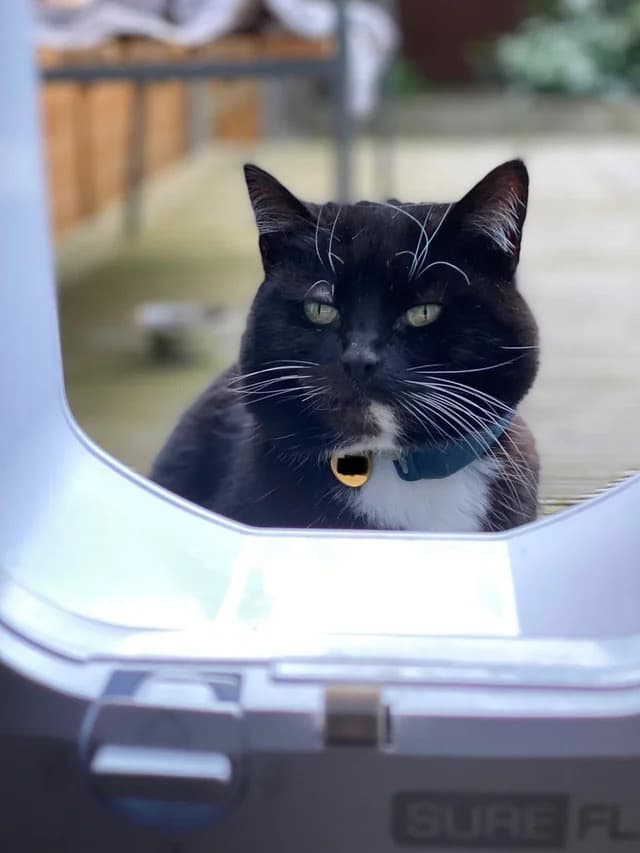
Rescue cat and head of household.
If your team uses this platform for professional development, here is what you should know.
Pass records are stored in each learner's account profile. They show course name, completion date, score, and level. Learners can share a screenshot of their record.
No employer dashboard or bulk data access. Learner data belongs to the learner. This platform does not share personal information with employers or third parties.
Course content is mapped to published objectives and common professional frameworks. Each course description lists the standards and certifications it aligns to.
Questions about using this for your team? Get in touch.
If something is unclear, tell me. If something is wrong, definitely tell me. This site improves because people point at the weak bits.